Tuesday, May 14, 2019

An Introduction to Foam Rolling

For people with enough upper body strength, it's worth learning about foam rolling.  I learned the basics from my personal trainer a few years ago.  After using a foam roller at the fitness center for a little while, I decided it was worth investing in one that I could use at home.  I think it was worthwhile.

The key point for foam rolling is to take it slow and pay attention to how you feel as you roll.  Only need a few rolls for each muscle group.  As with regular stretching, consistency helps.  Can use a foam roller daily, but most useful after exercise.  Or a day of skiing. :-)

Introduction to foam rolling, exercises start at 2:20
geared towards people over 50

10 best foam rolling uses
 presented by a physical therapist
good for quick review

Working on hips
from a series for seniors

Monday, May 13, 2019

One leg squat and exercises good for knees

Although it's been several years since I needed to do knee rehab, I still look around for new ideas for strengthening muscles related to knees.  Here are a few videos by an Aussie, Tim Keeley, of Physio Fitness that are not only good for knee rehab but also good for older skiers who want to strengthen muscles that help support the knee.

The one-leg ball squat is something I haven't seen before.  It's nice that he demonstrates both easier and harder ways to make use of the exercise.  He also shows what to avoid.  The BOSU and a stability ball were the first items that I got for home use during knee rehab.

Skier Squat

BOSU side step and jump


One Leg Ball Squat


Sunday, May 12, 2019

Core strengthening based on pilates

Exercises based on pilates are a good way to strengthen the core.  Here is a 15-min workout with six exercises that are relatively easy to figure out.  They are from on a website by an LA-based pilates instructor.  Her suggestion is to do them 3-4 times a week.


Here is an example of a full Pilates workout with good explanations for each exercise.  Also includes both easier and harder variations for many exercises. It can be helpful to learn Pilates techniques in a class to begin with.  Although having a dance background made it easier for me because I remembered a few of the exercises from dance classes long ago. 

30 Minutes Mat Pilates Core Workout For a Great Full Body Workout
https://youtu.be/ywJe6ZJhyA0


Thursday, May 9, 2019

Stretches with TRX - 3 for Upper Body, 3 for Lower

One of the features I really like about using the TRX is that I can easily do all-purpose stretches.  Meaning that the stretch is helpful for several different parts of the body at the same time.

Each these videos cover three stretches, the first involves the upper body, the second is for the lower body.  The third upper body stretch is one I've been doing for quite a while after getting started on the TRX with the help of my personal trainer.  It feels really good.  Have also done the "Figure Four" stretch for lower body, but not until about a year after knee rehab.


Wednesday, May 1, 2019

Importance of dynamic balance

When it comes to fitness elements for skiing, balance is key.  In particular dynamic balance.  The first article below includes definitions of the difference between static and dynamic balance.  The second article was written for college athletes about the fact that better balance makes it easier to use whatever strength you have.  Click on a link to read an entire article.  To ski efficiently requires good balance, both side-to-side and fore-aft.

In 2012 when I was doing knee rehab, I found the emphasis on the importance of proprioception made a lot of sense.  When I popped off an ACL, my balance was very off for the first week.  Learning about proprioception was very helpful.

The best way to start improving 1-leg balance is to start with static balance exercises.  My first blog post was about balance exercises that can be done anytime, anywhere.

Yoga & Balance: Static vs. Dynamic Balance
https://annwestyoga.com/yoga-balance-static-vs-dynamic-balance/

Static balance
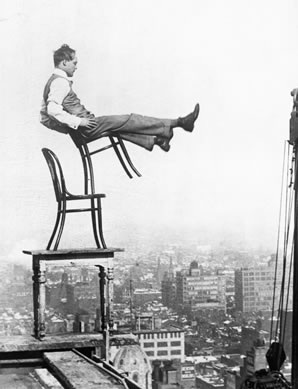

Fearless balance!
Static balance is the ability to balance while stationary. It’s what most people think of when they picture a balanced position. To be able to balance statically your body’s center of gravity must be lined up above your center of support. When standing on two legs, the center of support is the center point between your two feet. When standing on one leg, it’s at the center of the standing leg foot.
Let’s pause to spare a thought for our fearless balancer perched on two narrow chair legs to the right. Notice how his center of gravity, the point between the weight of his trunk leaning back and his legs stretching forward, lines up above the two back legs of the chair he’s sitting on. The heavier weight distribution of his trunk and head leaning back make up for the slight forward positioning of the lower chair and table.

Dynamic balance

Dynamic balance on the other hand, is the ability to balance while in motion or when switching positions. Your body is being affected by two forces, gravity and momentum, each one pulling you in different directions. In dynamic balance your inner balance sensors have to work harder to keep your center of gravity above your base. This is the main type of balance we use during movement in our daily lives.

Enhancing Sports Performance with Dynamic Balance Training
http://www.collegesportsscholarships.com/balance-training-athletes.htm

Balance and sports
While strength and cardio training are critical aspects of conditioning, balance is the foundation of good health, and everyone can improve their balance, regardless of ability, according to Louis Stack, a Canadian National Speed Skiing team member and balance training expert. In fact, some researchers suggest that the better you can balance, the less time you will need to spend increase your strength. “Balance conditioning is a way to train the body to make better use of the strength you already have,” says Stack. He suggests placing more emphasis on learning to move efficiently, with little wasted effort: “When you train someone for stabilization, proprioception and balance, by default he or she is at less risk for injury. Good balance reduces [the] need for additional effort.
“Balance is both a movement skill that enhances technique, and a conditioning element that can be improved. Another way to understand balance is as a function of the nervous system, which is directly influenced by the five senses. A sixth sense — proprioception — in the muscles, bones, hands, feet and connective tissues alerts the body when balance is threatened. The body’s balance centers — the eyes, ears and feet — work together to sense imbalance and help correct posture. Basically, the body’s ability to right itself (balance) is activated by stimulus: a response to an unexpected bump in the terrain, a sudden change in wind direction or an impulsive pass of the ball. Action in the canals of the ears detects abnormal tipping of the head in relation to gravity, and sends signals to the nervous system. When you lose balance, your brain sends instructions to the muscles and bones about how and when to react.
Balance training facilitates body awareness about the relationship of mass (hips) over the base of support (distance created between the feet or over one foot). While playing sports, this is a difficult thing to sense, but in a controlled training environment, these “feelings” can be introduced to athletes. The benefit is in “remembered” reactions to imbalance created in training situations. Balance awareness becomes an innate, automatic skill.

Friday, December 28, 2018

What is autophagy? Why is fasting related?

One of the side benefits of fasting is that it's possible to initiate autophagy with a long enough fast.  But what does that mean?  After researching for a while, the simple way I view the idea is that the body has a natural means of dealing with damaged cells that goes into action when fasting.  How long a fast depends on a variety of factors, but for many people 24-48 hours is sufficient.  In some situations, 12 hours may be enough.

The benefits of autophagy include decreased risk of some cancers as well as improved brain function.  There is ongoing research in animals and humans related to Alzheimer's.

Below are descriptions of autophagy by a sample of people who believe in the value of fasting and/or a ketogenic diet.  The viewpoints and styles vary.  As with any medical topic, getting more than one opinion is valuable as you decide what may work best for your unique situation.


Autophagy & Intermittent Fasting: Activate Garbage Recycling and Cell Remodeling, 4 min, 2017
https://youtu.be/10jNZleNH9w
Dr. Eric Berg, chiropractor with an interest in nutrition


Autophagy and Fasting: The Mystery Explained, 13 min, 2018
https://youtu.be/rDzIbkyr5QQ
Dr. Annette Bozworth, internal medicine, promotes a keto diet

Top Fasting Benefits: Autophagy Explained - Thomas DeLauer, 8 min, 2018
https://youtu.be/FGoLcJxApCA
Thomas DeLauer, fitness and health guru


Intermittent Fasting and the Aging Woman | Autophagy, Cancer, Anti Aging and Fasting, 21 min, 2017
https://youtu.be/aQXjKgKEe2A
Dy Ann Parham, 50-something woman interested in helping older women be fit

Thursday, December 27, 2018

Intermittent Fasting BBC Documentary 2012 by Dr. Michael Moseley

Dr. Michael Moseley discovered the potential benefits of fasting back 2012 when he was a BBC science journalist and executive producer.  Dr. Moseley studied to be a psychiatrist at the Royal Free Hospital Medical School in London, but his first job was as a banker.  He changed direction professionally again in 1985 and joined a BBC trainee program as an assistant producer.  He is married to a physician and is a father of four.

In 2012, Moseley was asked to research fasting for a BBC documentary, including trying the idea himself.  He was in his fifties.  Researchers he met with included Prof. Luigi Fontana of Washington University School of Medicine, Dr. Krista Varady of the Univ. of Illinois, and Prof. Mark Matteson.    He was not particularly looking forward to the idea of fasting for 3 days and 4 nights.  However, the changes were significant enough (at 33 minute mark in the BBC documentary) that after going home he experimented with the fasting for five weeks based on the 5-2 approach.  The results were similar to the 4-day fast (52 min mark).  His first book about the "Fast Diet" came out in 2013 and became a NY Times best seller; it was updated in 2015.

The BBC documentary is an hour and well worth watching.  For a shorter introduction, check out report below by an Australian journalist who traveled to meet Moseley in 2014.

5 2 Diet, 16 min - 2014
https://youtu.be/VWtaLLjJzn4


Eat, Fast & Live Longer BBC Documentary, 1 hr, created 2012, posted 2015
https://youtu.be/Ihhj_VSKiTs